
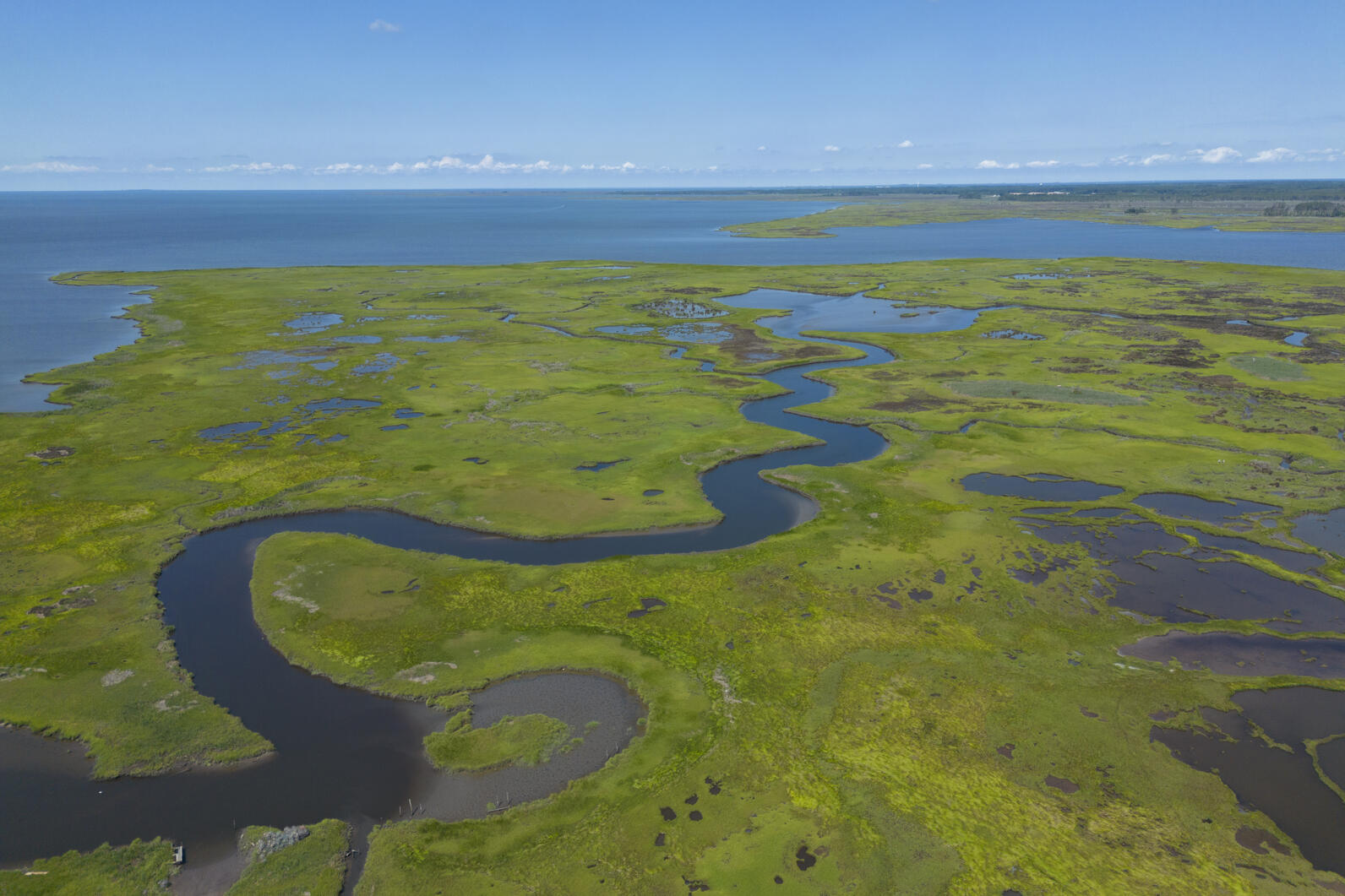
Baltimore, MD — February 05, 2026 — Allen Family Philanthropies has awarded a $790,000 grant to Audubon Mid-Atlantic for large-scale bird surveys across the Chesapeake Bay’s tidal marshes in Maryland, with a special focus on one of the region’s most imperiled species: the Saltmarsh Sparrow.
The work is a core component of Marshes for Tomorrow, an Audubon-led collaboration to address Maryland’s salt marsh crisis through science, restoration, and protection. With this grant, Audubon will study how landscape changes and restoration efforts affect the Saltmarsh Sparrow and other species, creating a scientific baseline to measure how restoration improves marsh health for birds and the communities that rely on them.
“Tidal marshes are essential for birds like the Saltmarsh Sparrow, and they are just as important for the people who live alongside them,” said David Curson, Audubon Mid-Atlantic coast program director. “This grant allows us to connect restoration with the science needed to ensure we’re giving birds their best chance to survive, which will be vital to saving these marshes for birds and people.”
The Saltmarsh Sparrow nests exclusively in tidal marshes and will be the primary focus of the monitoring. The species faces a high risk of extinction due to the accelerating loss of its marsh habitat and rising seas.
Maryland supports 25 percent of the Saltmarsh Sparrow’s global breeding population, yet its tidal marshes are increasingly fragmented as open-water pools form through a process known as ponding. This project will examine how those landscape-scale changes, along with targeted restoration efforts, affect nesting success and survival.
Audubon and partners will conduct marsh vegetation and bird surveys, test restoration techniques, and study smaller-scale habitat features to identify what makes marshes suitable for breeding birds. The findings will help determine how marsh fragmentation affects vulnerable species and how restored marshes change over time with and without intervention.
Beyond supporting wildlife, healthy tidal marshes absorb floodwaters, buffer storm surge, and stabilize shorelines, helping safeguard homes, infrastructure, and working waterfronts. When marshes thrive, water quality improves and local economies tied to fisheries and recreation become more resilient.
The grant is part of the Partnership to Advance Conservation Science and Practice, a collaboration between Allen Family Philanthropies and the U.S. National Science Foundation that supports projects linking scientific research with on-the-ground conservation.
Learn more about Audubon Mid-Atlantic’s work in the Chesapeake Bay and the Marshes for Tomorrow initiative.
Contact:
Ben Graham, Senior Communications Manager. ben.graham@audubon.org
***
Audubon Mid-Atlantic is a regional office of the National Audubon Society, envisioning a Mid-Atlantic region of healthy and resilient ecosystems where birds thrive and where all people have access to nature and a voice in environmental stewardship. Working alongside a diverse flock of supporters and partners, Audubon Mid-Atlantic strives to slow down and reverse the impact that climate change and habitat loss have had on the wide range of bird species that depend on the Mid-Atlantic region.